The format in one line
Twenty overs a side, a fixed powerplay at the start, and a result usually decided in about three hours. The scoring pace is high, and the margin for error is small.
What changes for the scorer
- The book moves fast. Score each ball as it is bowled. A missed boundary in an over of 18 runs is hard to rebuild.
- The powerplay matters. Mark its end in the book, and check the fielding restriction is recorded.
- Free hits. A no-ball in T20 is usually followed by a free hit. Write the no-ball first, then the free hit.
- Bowling limits. Each bowler can bowl at most four overs in a standard T20, so keep the analysis up to date.
Pace and checks
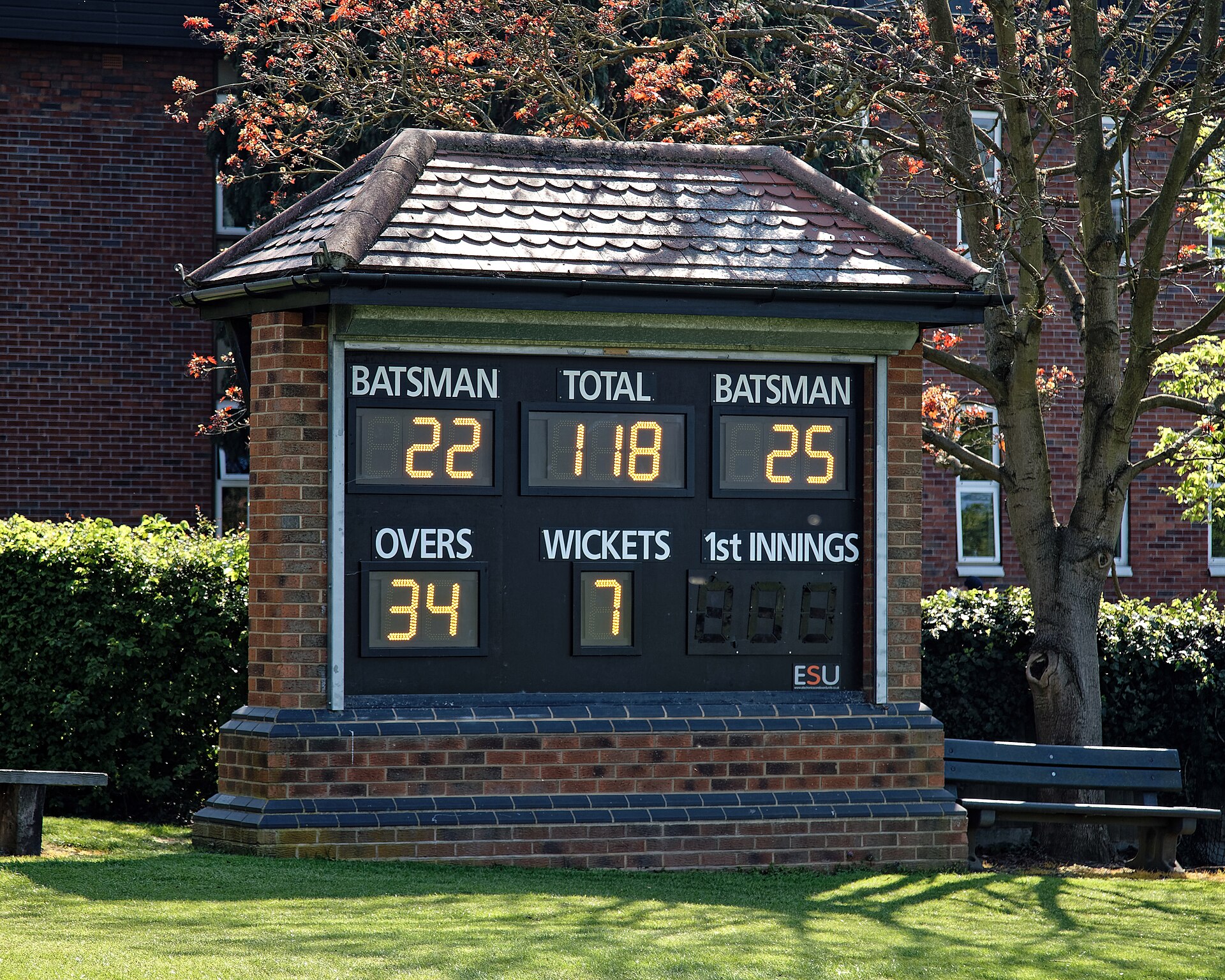
Check the score every over, not every five. A quick check at the end of each over catches an error before it compounds.
Time and penalties
Time penalties and slow over-rates are umpire matters. Your job is not to invent them in the extras column. If the umpire awards penalty runs, write them as penalty runs with the reason.
Super overs and ties
A tied T20 may go to a super over. Keep the super over as a separate innings on the book, as covered in the super-over guide.
Common mistakes
- Missing a no-ball in a fast over, so the bowling analysis is wrong.
- Counting the free hit as a normal legal ball when the batter is out of the usual rules.
- Recording the powerplay end one over late.
Citations
Playing conditions for the competition. The MCC Laws cover the basic scoring events.
Match questions
Questions scorers actually ask
- 01 How many overs can one bowler bowl in T20?
- Four in a standard T20, unless the competition sets a different limit. Check the playing conditions.
- 02 What is the scoring rate for a T20?
- Runs per over. A side scoring 160 in twenty overs has an average of 8 runs an over.
- 03 Does a T20 always use a powerplay?
- Most international and franchise T20s do, but club rules vary. Write what your competition uses at the top of the book.